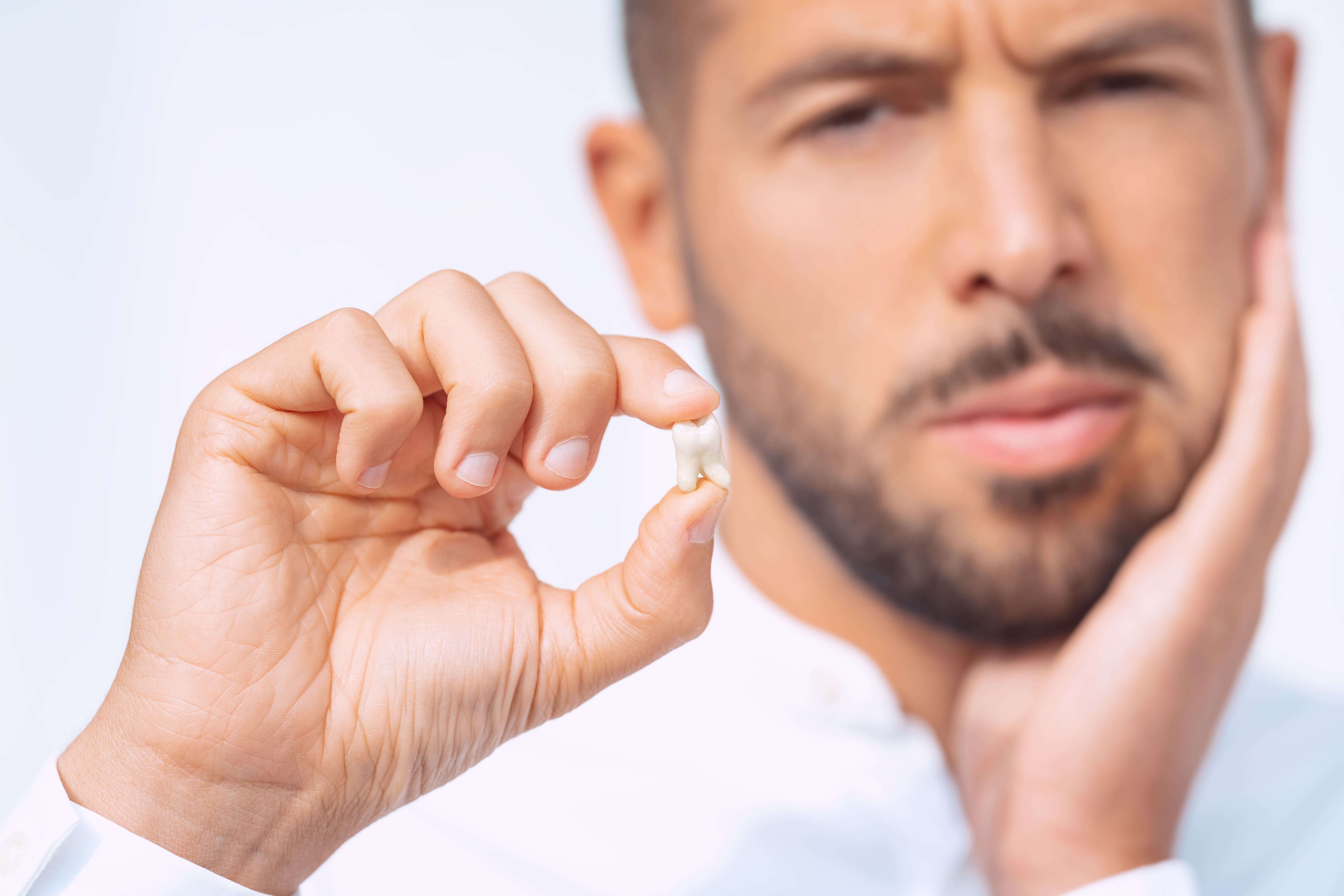



Quick answer: Start with a desensitizing toothpaste used twice a day, brush gently with a soft brush, and cut back on acidic drinks. If the sensitivity lasts more than a few weeks, keeps getting worse, or centers on one tooth, see a dentist. Sensitivity can come from exposed roots, worn enamel, a cavity, or a cracked tooth, and each needs a different fix.
You take a sip of iced water on a hot afternoon.
Before you even swallow, a sharp jolt shoots through a tooth. It is gone in a second or two, but now you are chewing on the other side and wondering what just happened.
Maybe it happens with ice cream. Maybe with a cold breath of morning air. Maybe when you brush along the gumline.
The simple answer is that you most likely have dentin hypersensitivity, a short, sharp pain that happens when the softer layer under your enamel becomes exposed.
The more honest answer is that “sensitive teeth” is a symptom, not a diagnosis. The same zing can come from a harmless exposed root or from a cavity or crack that needs treatment. The right fix depends on which one you have.
This guide walks through both.
What Is Tooth Hypersensitivity, Exactly?
Under your enamel sits dentin, a layer filled with thousands of microscopic tubes that lead toward the nerve. When enamel wears away or gums pull back, those tubes become exposed. Cold, heat, sweets, or even a fingernail can move the fluid inside them and trigger a quick burst of pain.
Researchers describe dentin hypersensitivity as being caused by the exposure and open state of these dentinal tubules (Lin et al., 2013). A Canadian expert panel also stressed that it is a diagnosis of exclusion: other causes of tooth pain need to be ruled out first (Canadian Advisory Board on Dentin Hypersensitivity, 2003).
It is also common. A systematic review of 77 studies put the best overall estimate at about 11.5% of people, with much higher numbers in some groups (Favaro Zeola et al., 2019).
You are not alone, and you are not being dramatic.
Why Are My Teeth Suddenly So Sensitive?
Sensitivity often feels sudden, but the cause usually builds slowly. The most common reasons include:
- Gum recession. When gums pull back, the root surface is exposed. Roots are not covered by enamel, so they react more easily.
- Enamel wear from acids. Soda, citrus, wine, and vinegar can soften enamel over time (Columbia University College of Dental Medicine, n.d.).
- Grinding or clenching. Nighttime grinding wears enamel and can stress teeth.
- Decay, leaky fillings, or broken teeth. These open a direct path to the inner tooth.
- Gum disease. Inflammation can lead to recession that exposes roots.
These problems tend to travel together. A large study across seven European countries found that dentin hypersensitivity was strongly linked with erosive tooth wear and gum recession, and also with heartburn (West et al., 2024).
So if your teeth are sensitive, it is worth asking what is wearing them down, not only how to numb the zing.
Is It Sensitivity or a Cavity, Crack, or Something Else?
This is the question that matters most.
Classic hypersensitivity has a pattern. It is sharp, short, and goes away within seconds once the trigger is gone. It often affects several teeth, especially near the gumline.
Other problems behave differently. Pain that lingers after the cold is gone, throbs on its own, wakes you up, or happens only when you bite on one spot points to something else. That might be decay, a cracked tooth, a failing filling, or an irritated nerve.
That is why the Canadian consensus panel recommends ruling out these other conditions before treating a tooth as simply “sensitive” (Canadian Advisory Board on Dentin Hypersensitivity, 2003).

At our office we use a hands-on exam plus imaging such as panoramic digital X-rays, described on our technology page, to look for these hidden causes.
What Can I Do at Home for Sensitive Teeth?
For mild, generalized sensitivity, home care is the right first step.
1. Switch to a desensitizing toothpaste
This is the best-studied option. A meta-analysis of 31 randomized trials found good evidence for toothpastes containing potassium, stannous fluoride, calcium sodium phosphosilicate, or arginine, but not for strontium (Bae et al., 2015).
A larger network meta-analysis of 125 trials found that most desensitizing formulas beat regular fluoride toothpaste. Calcium sodium phosphosilicate performed well across cold, air, and touch tests, and stannous fluoride and potassium combinations also showed strong results (Martins et al., 2020).
In plain terms: check the active ingredient on the label, not just the word “sensitive.”
2. Give it time
These toothpastes are not instant. It can take a couple of weeks to notice results (Columbia University College of Dental Medicine, n.d.). Use it every time you brush.
3. Brush gently
Use a soft-bristled brush and light pressure. Scrubbing hard along the gumline can wear the exposed root surface and make things worse.
4. Be smart about acids
You do not need to give up citrus or coffee. Try to enjoy acidic drinks with meals rather than sipping them all day, and rinse with water afterward.
5. Protect against grinding
If you wake up with a sore jaw or your partner hears grinding, a custom night guard can protect your enamel while you sleep.
What Do Dentists Do for Sensitive Teeth?
When home care is not enough, there are effective in-office options.
A network meta-analysis of 40 studies compared in-office treatments such as tubule-sealing agents, nerve-calming agents, lasers, and combinations. Most active treatments clearly outperformed placebo, and no single type was a clear winner (Lin et al., 2013).
Depending on the cause, a dentist may recommend:
- Fluoride or desensitizing varnish painted on exposed areas to strengthen enamel and calm the tubules.
- Bonding or a sealant to cover an exposed root surface.
- A filling, inlay, or crown when decay or a broken tooth is the real cause. Our dental fillings page explains that option.
- Gum treatment or a gum graft when recession is significant. A graft can protect the root and reduce sensitivity (Columbia University College of Dental Medicine, n.d.). Learn more about our gum disease treatment.
- Root canal therapy as a last resort, when severe pain does not respond to anything else. See our root canal page.
Comparing Sensitive Teeth Treatment Options
| Option | What it does | Best for | Main limit |
|---|---|---|---|
| Desensitizing toothpaste | Blocks tubules or calms the nerve response | Mild sensitivity on several teeth | Takes a couple of weeks; must be used daily |
| In-office varnish or desensitizer | Seals exposed dentin in one visit | Sensitivity that toothpaste has not fixed | May need repeating over time |
| Bonding or sealant | Physically covers exposed root surface | Notched or worn areas near the gumline | Can wear or chip; needs checking |
| Filling or crown | Repairs decay or a broken tooth | Sensitivity caused by a cavity or crack | Treats the tooth, not general sensitivity |
| Gum graft | Covers the exposed root with gum tissue | Significant recession | Minor surgery with healing time |
| Root canal | Removes the inflamed nerve | Severe, lingering pain in one tooth | Last resort; usually needs a crown afterward |
The Biggest Difference: Calming the Symptom vs. Fixing the Cause
Most sensitivity products calm the symptom. That is useful, and for many people it is all they need.
But if the root cause keeps going, the sensitivity tends to come back.
Acid wear continues. Gums keep receding. Grinding keeps chipping away at enamel. A small cavity keeps growing.
Real relief means matching the treatment to the reason.
That is the difference between a patient who buys tube after tube of sensitive toothpaste and one who gets lasting comfort.
What We Look at Before Recommending Sensitivity Treatment
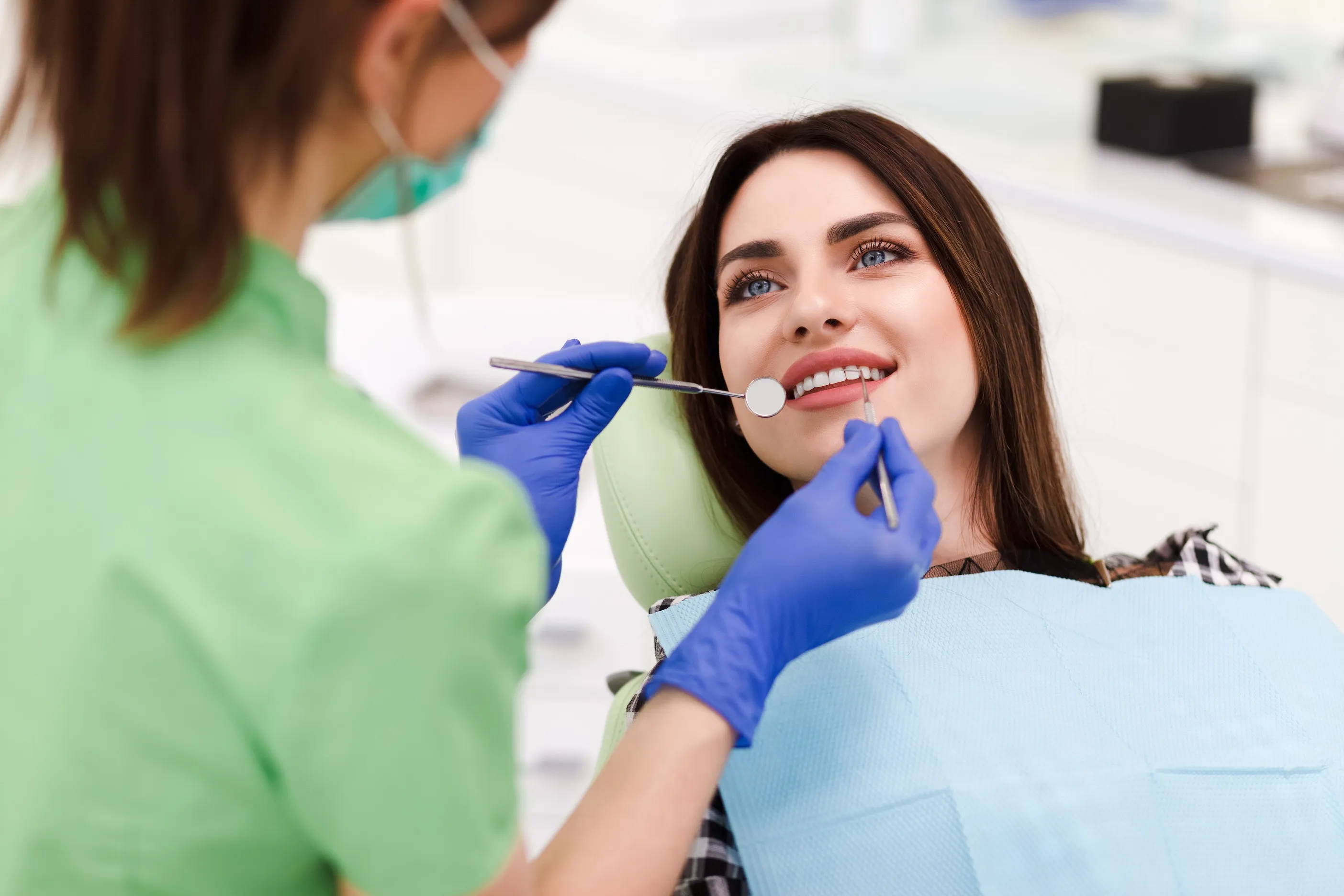
Before suggesting anything beyond toothpaste, we check:
- Where it hurts. One tooth or many? Near the gumline or on the biting surface?
- How it hurts. A quick zing, or pain that lingers or throbs?
- Your gums. Recession, inflammation, or signs of gum disease.
- Your enamel. Erosion patterns, notches at the gumline, and flattened biting edges from grinding.
- Existing work. Fillings and crowns with worn or leaky edges.
- Your habits. Diet, reflux, brushing style, and recent whitening.
- Imaging. X-rays to look for decay or problems you cannot feel yet.
Whitening is worth mentioning. Sensitivity during bleaching is common enough that researchers routinely measure it, and studies comparing at-home and in-office whitening found no difference in the risk or intensity of tooth sensitivity between the two (de Geus et al., 2016). If you are planning teeth whitening, tell us about any sensitivity first.
Risks and Limits of Sensitivity Treatments
Most sensitivity treatments are low risk. The bigger risk is assuming a tooth is “just sensitive” when it is not.
- Masking a bigger problem. Desensitizing toothpaste can dull warning signs from a cavity or crack. If one tooth keeps bothering you, get it checked.
- Results are not permanent. Varnishes and toothpaste effects can fade, so some people need ongoing care.
- Evidence varies. Studies on sensitivity use different tests and scales, so “best” products can differ from study to study.
- Surgery has trade-offs. Gum grafts can help but involve healing time.
How Much Does Sensitive Teeth Treatment Cost?
There is no single price, because “sensitive teeth” is not a single problem.
Desensitizing toothpaste is an inexpensive over-the-counter purchase. In-office varnish is a relatively simple procedure. Bonding, fillings, gum grafts, or root canals cost more, because they treat a specific cause.
Here is what we can say for sure:
- Our office accepts all PPO insurance plans, and our team verifies your benefits and files claims for you.
- For larger treatments, CareCredit offers flexible monthly payment options.
- Patients without insurance receive clear, upfront pricing before treatment.
You can find details on our insurance and financing page.
When Should I See a Dentist About Sensitive Teeth?
Call for an exam if:
- Sensitivity lasts more than a few weeks despite desensitizing toothpaste.
- It is focused on one tooth.
- Pain lingers after the trigger is gone, or hurts when you bite.
- You notice swelling, a bad taste, or a visible crack or hole.
For patients in La Puente, West Covina, Hacienda Heights, and nearby communities, sudden sensitivity is something we would rather see sooner than later. Our emergency dentistry team offers same-day emergency appointments when pain comes on fast.
And if it has been a while since your last checkup, a routine dental exam and cleaning is a good time to bring it up. Our post on the benefits of professional teeth cleaning explains why those visits matter.
Final Takeaways
- Tooth hypersensitivity is common and usually treatable.
- A short, sharp zing on several teeth is classic sensitivity. Lingering or one-tooth pain needs an exam.
- Choose a desensitizing toothpaste by its active ingredient, use it twice daily, and give it a couple of weeks.
- Brush gently, manage acidic drinks, and protect against grinding.
- In-office varnishes, bonding, and gum treatment can help when home care is not enough.
- Lasting relief comes from treating the cause, not just the symptom.
Get Relief From Sensitive Teeth at Azusa Dental Clinic
If cold drinks, sweets, or brushing are making you wince, you do not have to guess what is going on.
Our team in La Puente will find the reason for your sensitivity and walk you through options that fit your teeth and your budget. We speak English, Tagalog, and Spanish.
Book your consultation or call us at 626-336-4453.
Research References
- Bae JH, Kim YK, Myung SK. Desensitizing toothpaste versus placebo for dentin hypersensitivity: a systematic review and meta-analysis. J Clin Periodontol. 2015;42(2):131-141. https://pubmed.ncbi.nlm.nih.gov/25483802/
- Canadian Advisory Board on Dentin Hypersensitivity. Consensus-based recommendations for the diagnosis and management of dentin hypersensitivity. J Can Dent Assoc. 2003;69(4):221-226. https://pubmed.ncbi.nlm.nih.gov/12662460/
- Columbia University College of Dental Medicine. Sensitive Teeth. Dental Library. https://www.dental.columbia.edu/patient-care/dental-library/sensitive-teeth
- de Geus JL, Wambier LM, Kossatz S, Loguercio AD, Reis A. At-home vs in-office bleaching: a systematic review and meta-analysis. Oper Dent. 2016;41(4):341-356. https://pubmed.ncbi.nlm.nih.gov/27045285/
- Favaro Zeola L, Soares PV, Cunha-Cruz J. Prevalence of dentin hypersensitivity: systematic review and meta-analysis. J Dent. 2019;81:1-6. https://pubmed.ncbi.nlm.nih.gov/30639724/
- Lin PY, Cheng YW, Chu CY, Chien KL, Lin CP, Tu YK. In-office treatment for dentin hypersensitivity: a systematic review and network meta-analysis. J Clin Periodontol. 2013;40(1):53-64. https://pubmed.ncbi.nlm.nih.gov/23057701/
- Martins CC, Firmino RT, Riva JJ, et al. Desensitizing toothpastes for dentin hypersensitivity: a network meta-analysis. J Dent Res. 2020;99(5):514-522. https://pubmed.ncbi.nlm.nih.gov/32037944/
- West NX, Davies M, Sculean A, et al. Prevalence of dentine hypersensitivity, erosive tooth wear, gingival recession and periodontal health in seven European countries. J Dent. 2024;150:105364. https://pubmed.ncbi.nlm.nih.gov/39317300/