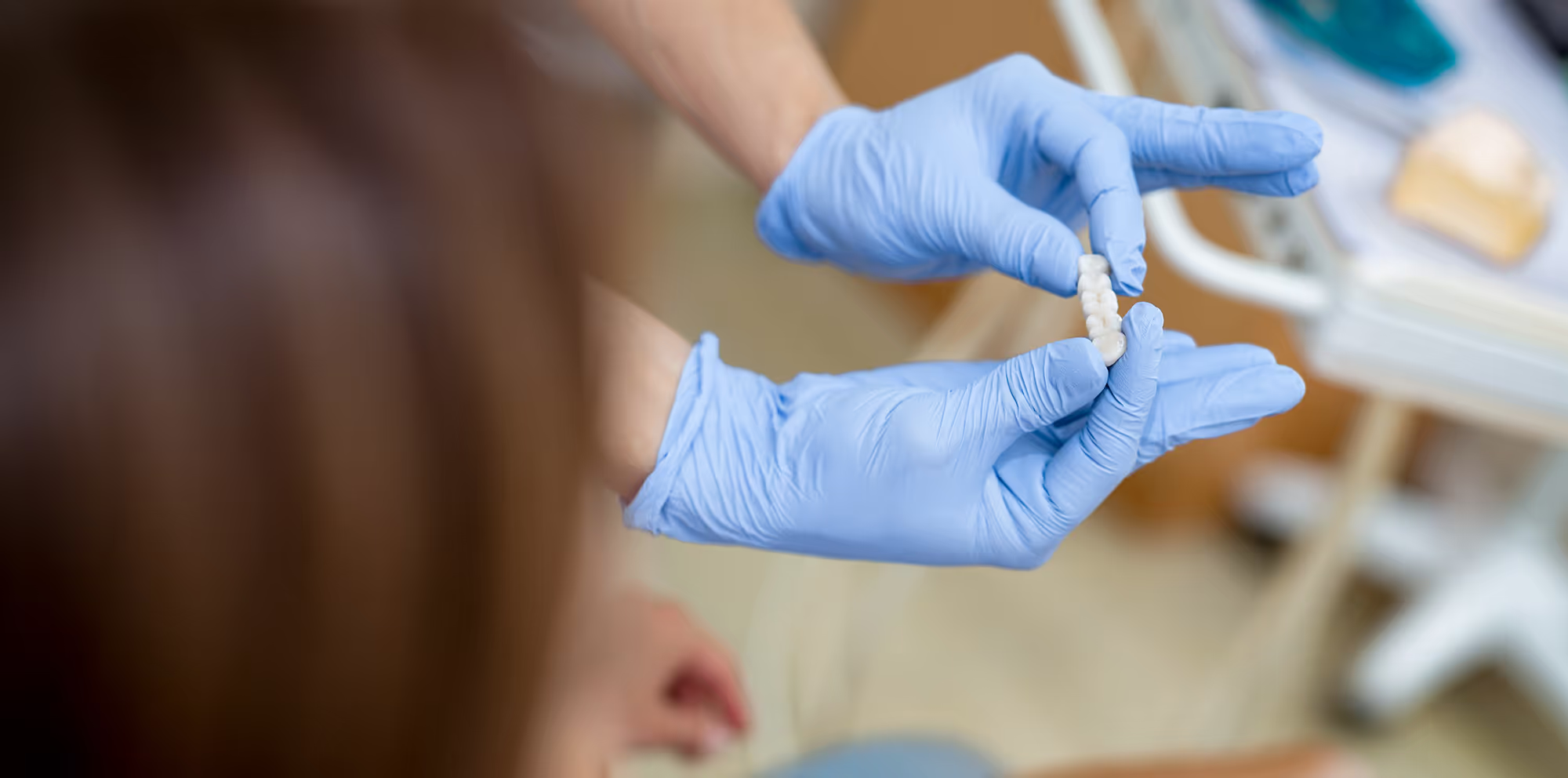


Quick answer: Full mouth reconstruction is a planned combination of treatments, such as crowns, veneers, implants, bridges, and bite correction, that rebuilds most or all of the teeth. It does not automatically mean dentures or pulling every tooth. It is mainly about restoring chewing, bite, and tooth structure, and it is usually done in phases over several months.
You have been patching things one tooth at a time for years.
A filling here. A crown there. A tooth that broke and never got replaced. Now your front teeth look shorter than they used to, chewing feels uneven, and every dental visit seems to uncover something new.
Someone mentions “full mouth reconstruction,” and your mind jumps straight to dentures, huge bills, and months in the dental chair.
The simple answer is that full mouth reconstruction is a coordinated plan to rebuild your teeth and bite so they work together again.
The more honest answer is that it is a big commitment, it is not the right choice for everyone, and a lot of what people believe about it is outdated or just wrong.
Let us sort the facts from the myths.
What Is Full Mouth Reconstruction?
Full mouth reconstruction, also called full mouth rehabilitation, is a treatment plan that restores most or all of the teeth in one or both jaws.
Depending on what you need, it may combine:
- Crowns to rebuild damaged or worn teeth
- Veneers to restore shape and appearance on front teeth
- Implants or bridges to replace missing teeth
- Gum treatment to create a healthy foundation
- Bite correction so upper and lower teeth meet properly

Our full-mouth rehabilitation page outlines how we approach it step by step.
Myth #1: “Full Mouth Reconstruction Means Getting Dentures”
Fact: Many reconstructions keep most of your natural teeth.
The goal is to save what can be saved and rebuild it. Worn teeth can be restored with porcelain crowns or veneers. Missing teeth can be replaced with dental implants or dental bridges.
Modern approaches lean toward less invasive treatment. A 2025 systematic review of minimally invasive full-mouth rehabilitation for moderate to severe tooth wear found low annual failure rates, especially for ceramic restorations, and patients reported high appreciation of the results (Fan et al., 2025).
When all teeth in an arch truly cannot be saved, implant-supported options are available. For people who already wear dentures, an umbrella review found that implant-retained overdentures improved quality of life and satisfaction compared with conventional complete dentures (Sharka et al., 2019).
Myth #2: “It Is Just a Cosmetic Procedure”
Fact: Full mouth reconstruction is mainly about function.
Yes, your smile usually looks better at the end. But the main reasons people need it are functional: severe wear, broken or missing teeth, a collapsed bite, or years of failing dental work.
European experts who wrote management guidelines for severe tooth wear focused on diagnosis, prevention, and controlling the cause of wear, with restorations as one part of a bigger plan (Loomans et al., 2017).
If chewing is hard and your teeth are wearing down, this is a health issue, not a vanity project.
Myth #3: “Changing My Bite Will Cause Jaw Problems”
Fact: When it is planned well, changing the bite height is generally well tolerated.
When teeth wear down, the distance between your upper and lower jaw can shrink. Rebuilding that height, called the vertical dimension of occlusion, is often part of reconstruction.
A systematic review concluded that a permanent increase in this bite height, when indicated, is a safe and predictable procedure. Some patients had symptoms at first, but they were self-limiting (Abduo, 2012).
A 2025 scoping review went further, describing the idea that bite changes cause TMJ disorders as lacking scientific evidence, and noting that patients usually adapt well (Lassmann et al., 2025).
That does not mean bite changes should be rushed. It means they should be planned carefully and tested when needed.
Myth #4: “I Am Too Old for This”
Fact: Age by itself is rarely the barrier.
Implants are often part of reconstruction, and research on older adults is encouraging. A meta-analysis found implant survival of 96.2% at 5 years and 91.2% at 10 years in elderly patients (Srinivasan et al., 2017).
Overall health, gum health, medications, and your own goals matter far more than the number on your birth certificate.
Myth #5: “It All Happens in One Visit”
Fact: Most reconstructions are done in phases.
Some cases finish in a few visits. Others need phased treatment over several months, especially when gum treatment, extractions, grafting, or implant healing are involved.
For patients in La Puente, Hacienda Heights, Rowland Heights, and nearby, that usually means a clear, step-by-step schedule you agree on up front, with temporary teeth when needed so you are never left without a smile in between.
Myth #6: “Once It Is Done, It Lasts Forever”
Fact: Good restorations last a long time, but they still need care.
In the 2025 review of full-mouth rehabilitation for worn teeth, restoration fracture was the most common complication, regardless of material (Fan et al., 2025).
Grinding, gum disease, and new decay at the edges of crowns can all shorten the life of dental work. Regular checkups, good home care, and often a night guard protect the investment.
Myth #7: “If My Teeth Are Worn, I Need to Fix Everything Now”
Fact: Not always.
The European consensus on severe tooth wear says restorative treatment is often best delayed as long as possible, and when it is needed, a conservative, minimally invasive approach is recommended (Loomans et al., 2017).
For some patients, the right first step is finding the cause of wear, protecting the teeth, and monitoring them over time.
Who Is a Good Candidate for Full Mouth Reconstruction?
You might benefit from full mouth reconstruction if you have:
- Severe wear that has made your teeth short, flat, or sensitive
- Many teeth that are broken, cracked, or heavily filled
- Several missing teeth
- A bite that feels uneven, collapsed, or uncomfortable
- Years of dental problems that keep coming back one tooth at a time
Good candidates also have gums and bone that can be made healthy, medical conditions that are reasonably well controlled, and a willingness to keep up with home care and checkups afterward.
If only a few teeth are involved, targeted treatment such as a few dental crowns may be all you need.
What Does the Full Mouth Reconstruction Process Look Like?
Every plan is different, but most follow the same general path:
- Comprehensive evaluation and 3D diagnostics. Digital scans and X-rays show the condition of your teeth, gums, bite, and jaw.
- Customized treatment planning. We map out which teeth need what, in what order, and how the final bite should look.
- Restoring structure and function. Gum care, extractions, implants, crowns, bridges, or veneers are done in planned phases.
- Aesthetic refinement. Shape, shade, and proportions are fine-tuned so the result looks natural.
- Follow-up and maintenance. Regular checkups keep the new restorations and your gums healthy.
Temporary restorations are often used along the way. They let you test how the new shape and bite feel before the final work is made.
The Biggest Difference: Rebuilding Your Bite vs. Redesigning Your Smile
People often confuse full mouth reconstruction with a smile makeover. They overlap, but the starting point is different.
| Full mouth reconstruction | Cosmetic smile makeover | |
|---|---|---|
| Main goal | Restore function, bite, and tooth structure | Improve how the smile looks |
| Usually needed for | Severe wear, many damaged or missing teeth, bite collapse | Color, shape, spacing, or symmetry concerns |
| Teeth involved | Most or all teeth in one or both jaws | Mainly the teeth that show when you smile |
| Common treatments | Crowns, implants, bridges, gum care, bite correction | Veneers, whitening, bonding, Invisalign |
| Timeline | Often phased over several months | Often shorter |
| Insurance | Restorative parts may be partly covered, depending on plan | Usually considered elective |
A reconstruction starts with how your teeth work. A makeover starts with how they look.
If your concerns are mostly cosmetic, our cosmetic smile makeovers page may be a better fit.
What We Look at Before Recommending Full Mouth Reconstruction
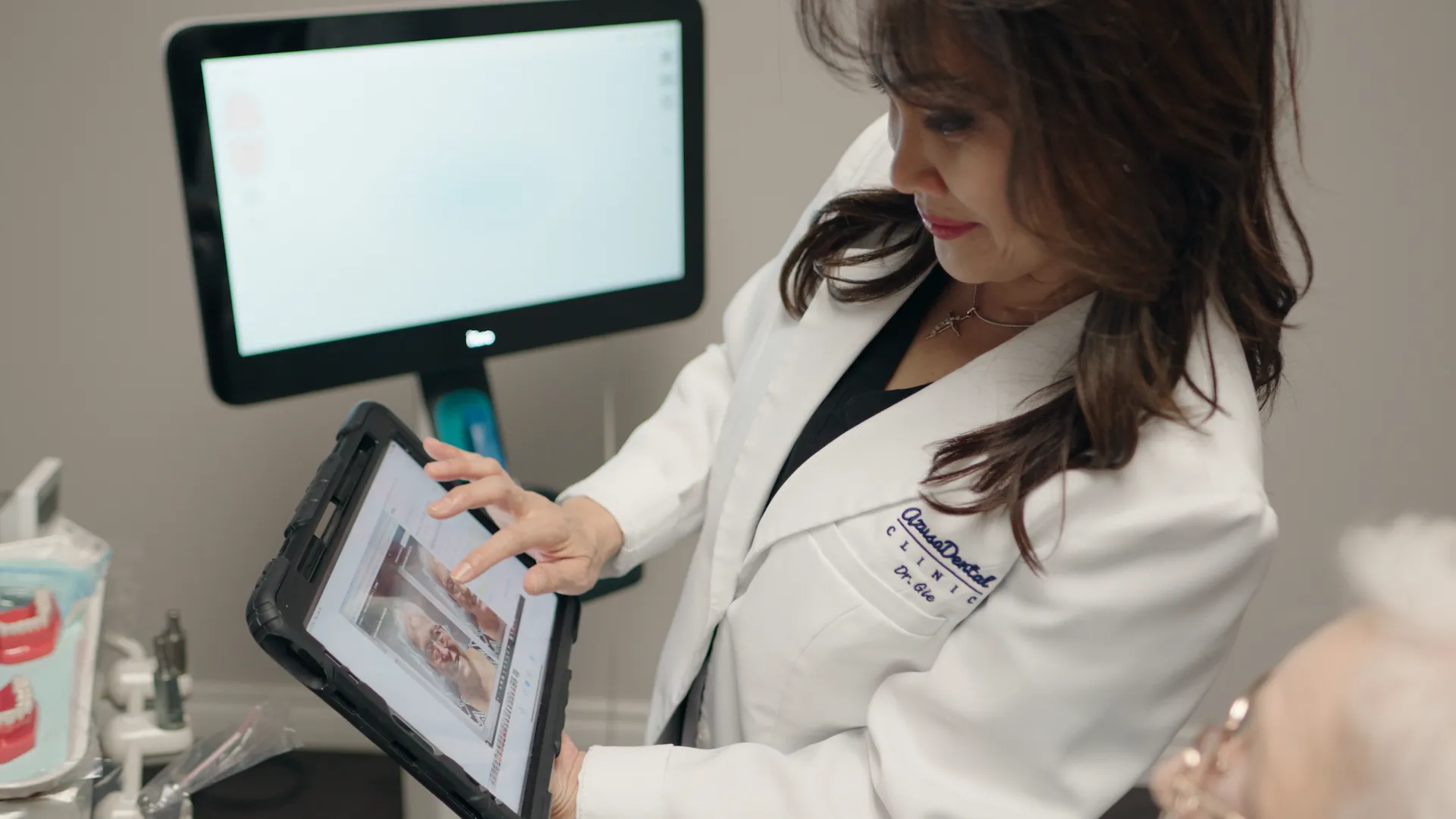
A reconstruction is only as good as its plan. Before recommending one, we evaluate:
- Every tooth, including decay, cracks, old dental work, and which teeth can be saved.
- Gum and bone health, using exams, digital X-rays, and CBCT 3D imaging.
- Your bite, including how worn the teeth are and how the jaws meet.
- The cause of the damage, such as grinding, acid wear, or untreated gum disease.
- Your medical history, including medications that affect healing.
- Your priorities, such as comfort, appearance, timeline, and budget.
We use the iTero digital scanner and other tools listed on our technology page to plan with precision.
Risks and Limits of Full Mouth Reconstruction
- Restoration chips and fractures. These are the most common complication, especially in people who grind.
- Adjustment period. A new bite can feel strange at first. Symptoms are usually temporary, but some people need small adjustments.
- Tooth sensitivity. Teeth prepared for crowns or veneers may be sensitive for a while.
- Surgical risks. If implants or grafting are involved, those carry their own risks, such as infection or slower healing.
- Ongoing maintenance. Restorations do not replace the need for daily care and regular cleanings.
- Not every tooth can be saved. Sometimes extraction and replacement are the more predictable choice.
If dental anxiety is holding you back, ask about our sedation dentistry options.
How Much Does Full Mouth Reconstruction Cost?
Because every reconstruction is different, there is no standard price. The cost depends on:
- How many teeth need treatment
- Whether implants, extractions, or grafting are needed
- The materials used for crowns, veneers, and bridges
- Whether gum treatment is needed first
- How many phases the treatment is split into
After a full evaluation, you receive a written plan with costs for each phase. Insurance may cover restorative parts of treatment, depending on your plan. Our office accepts all PPO plans, verifies your benefits, and offers CareCredit for monthly payments. Visit our insurance and financing page to learn more.
If implants are likely part of your plan, our dental implants FAQ answers the most common questions.
Final Takeaways
- Full mouth reconstruction rebuilds most or all of your teeth with a coordinated plan.
- It does not automatically mean dentures. Saving natural teeth is often the goal.
- It is mainly about chewing, bite, and tooth structure, not just looks.
- Planned bite changes are generally well tolerated, and research does not support the idea that they cause TMJ disorders.
- Older adults can be excellent candidates.
- Treatment is usually phased over several months.
- Restorations need ongoing care, and grinding protection is often part of the plan.
Find Out If Full Mouth Reconstruction Is Right for You
If your teeth are worn, broken, or missing and you are tired of fixing them one at a time, it may be time for a complete plan.
At our La Puente office, we will review your teeth, gums, and bite, and explain every option, including ones that are less involved than you might expect. We speak English, Tagalog, and Spanish.
Book your consultation or call 626-336-4453.
Research References
- Abduo J. Safety of increasing vertical dimension of occlusion: a systematic review. Quintessence Int. 2012;43(5):369-380. https://pubmed.ncbi.nlm.nih.gov/22536588/
- Fan J, Wang B, Wang L, et al. Clinical performance of minimally invasive full-mouth rehabilitation using different materials and techniques for patients with moderate to severe tooth wear: a systematic review and meta-analysis. Clin Oral Investig. 2025;29(2):96. https://pubmed.ncbi.nlm.nih.gov/39875663/
- Lassmann Ł, Calamita MA, Manfredini D. Myths surrounding vertical dimension of occlusion in restorative dentistry: a scoping review. J Esthet Restor Dent. 2025;37(1):94-105. https://pubmed.ncbi.nlm.nih.gov/39189329/
- Loomans B, Opdam N, Attin T, et al. Severe tooth wear: European consensus statement on management guidelines. J Adhes Dent. 2017;19(2):111-119. https://pubmed.ncbi.nlm.nih.gov/28439579/
- Sharka R, Abed H, Hector M. Oral health-related quality of life and satisfaction of edentulous patients using conventional complete dentures and implant-retained overdentures: an umbrella systematic review. Gerodontology. 2019;36(3):195-204. https://pubmed.ncbi.nlm.nih.gov/30875108/
- Srinivasan M, Meyer S, Mombelli A, Müller F. Dental implants in the elderly population: a systematic review and meta-analysis. Clin Oral Implants Res. 2017;28(8):920-930. https://pubmed.ncbi.nlm.nih.gov/27273468/